

Introduction: The Productivity Gap in Mid-Range Earthmoving
Construction and quarry operators face a persistent challenge: 1.2m³ class excavators often lack the bucket fill factor and cycle efficiency for high-density materials, while 1.8m³ machines increase capital expenditure (CAPEX) and logistical constraints (transport width, ground pressure). The 1.5m³ bucket excavator class has emerged as the optimal balance—delivering 18–25% higher productivity per shift than 1.2m³ units with only 10–12% higher fuel consumption. This technical blog analyzes powertrain design, ISO/CE structural benchmarks, emissions compliance (EPA Tier 4 Final / EU Stage V), and real-world TCO (Total Cost of Ownership) data for fleet managers and procurement engineers.
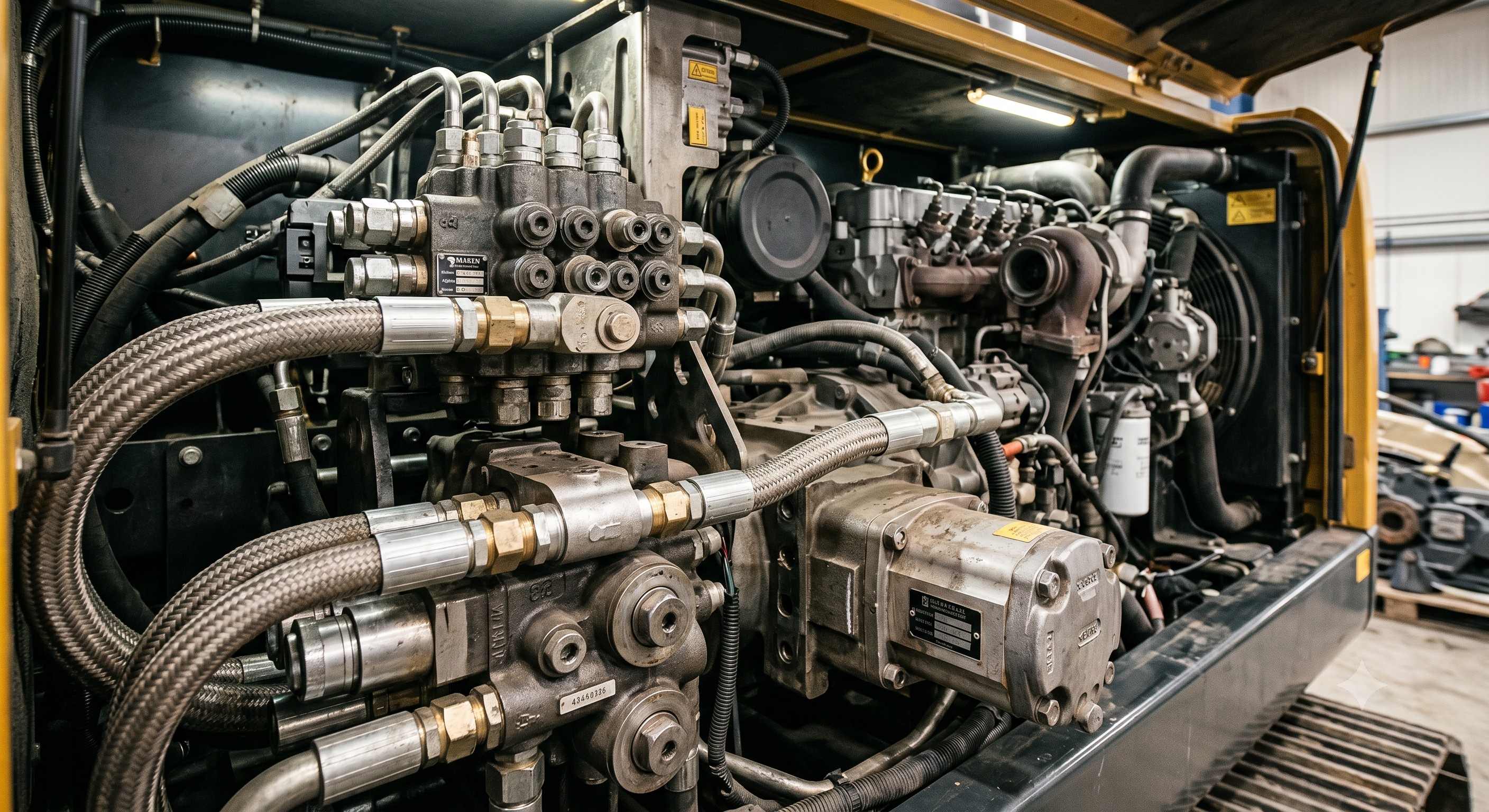
Core Powertrain & Structural Design
Engine-Hydraulic Matching for High Efficiency
A 1.5m³ excavator typically integrates a turbocharged diesel engine in the 150–190 HP (112–142 kW) range, with peak torque at 1,400–1,600 rpm. The critical metric is hydraulic system power: main pump flow of 2×180–220 L/min at 32–35 MPa (4640–5075 PSI) working pressure. Negative flow control or load-sensing (LS) systems reduce parasitic losses by 8–12% compared to open-center hydraulics. For Tier 4 Final/Stage V, DOC (Diesel Oxidation Catalyst) + DPF (Diesel Particulate Filter) + SCR (Selective Catalytic Reduction) configurations are standard, requiring DEF (AdBlue) consumption of 3–5% of fuel volume.
Chassis & Undercarriage Durability
The operating weight for this class ranges from 20,000 to 24,500 kg. Track shoe width is typically 600–700 mm, yielding ground pressure ≤ 45 kPa (6.5 PSI) for soft terrain. Track frame uses high-tensile steel (yield strength ≥ 450 MPa) with lubricated track links (greased & sealed) for 4,000+ hour wear life. ROPS/FOPS (ISO 12117/ISO 10262) certified cabs include 3-point mounting with viscous dampers to reduce operator whole-body vibration (WBV) below 0.5 m/s² (ISO 2631-1).
Technical Specifications
The following baseline parameters represent industry consensus for a standard-duty 1.5m³ backhoe excavator (ISO 6016:2019 compliant).
| Key Parameter | Technical Specification (Typical Range) |
|---|---|
| Engine Horsepower | 170 HP (127 kW) @ 1,900 rpm / 150-190 HP range |
| Operating Weight | 22,500 kg (49,600 lbs) / 20,000-24,500 kg |
| Bucket Capacity (SAE J296) | 1.5 m³ (1.96 yd³) / Heaped |
| Hydraulic Pressure (Main Relief) | 34.3 MPa (4,975 PSI) |
| Hydraulic Flow (Main Pumps) | 2 x 210 L/min (55.5 gpm each) |
| Max Digging Depth | 6.2 m (20.3 ft) |
| Max Dump Height | 6.8 m (22.3 ft) |
| Ground Pressure (600mm shoes) | 42.5 kPa (6.16 PSI) |
| Fuel Tank Capacity | 350 L (92.5 gal) |
| Emissions Standard | EPA Tier 4 Final / EU Stage V (DOC+DPF+SCR) |
Comparative Advantage: TCO & ROI Analysis
Against the 1.2m³ class: Cycle time for a 180° dig-dump cycle is 12–14s vs 10–12s (1.2m³), but material moved per hour increases from ~270m³ to ~350m³ (loose soil, 1.5 swell factor). Fuel consumption scales from 14–16 L/h to 18–22 L/h, achieving fuel efficiency per m³ of 0.051–0.063 L/m³ vs 0.052–0.059 L/m³ for 1.2m³—statistically equivalent. ROI breakeven point occurs 300–400 operating hours sooner due to higher hourly billing potential ($125–$145/h vs $100–$115/h). Against 1.8m³ class: Lower transport costs (no permit required in most regions) and 15–18% lower tire/undercarriage wear. Optimal application volume: 150,000–500,000 m³ per year.
Heavy-Duty Application Scenarios
The 1.5m³ excavator excels in:
Quarry overburden removal – matched with 35–40 ton rigid dump trucks (3–4 passes per truck).
Highway earthworks – cutting/filling with clay or gravel, leveraging arm breakout force (≥ 110 kN) to handle compacted layers.
Urban drainage & utility trenching – 2.8–3.2m maximum digging depth with bucket rotation angle of 175°–180° for precise sloped walls.
Demolition with multi-processor attachment – hydraulic flow (≥ 350 L/min combined) supports shears or pulverizers up to 2,500 kg.
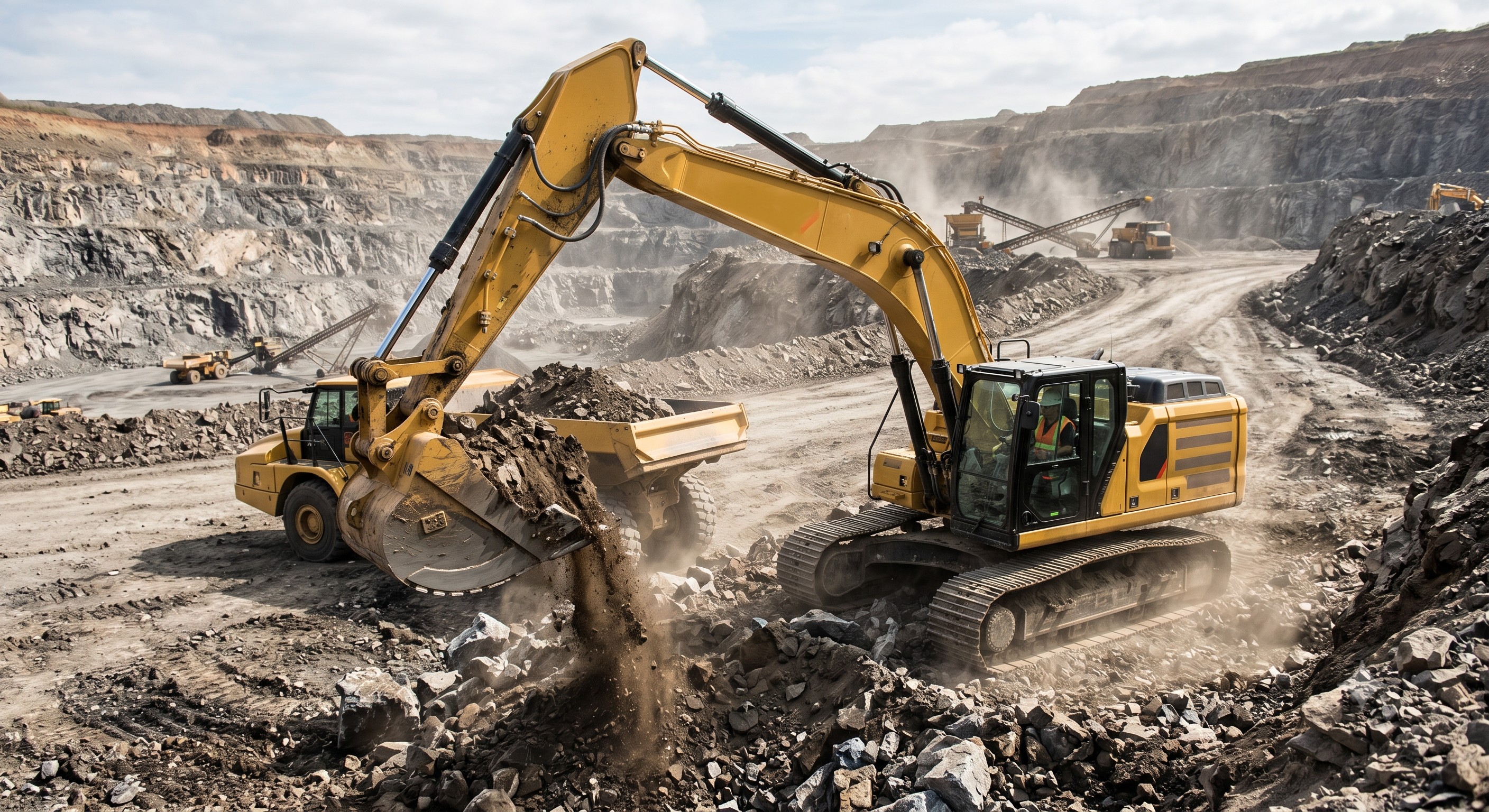
Conclusion: The Efficient Frontier of Earthmoving
The 1.5m³ bucket excavator is not a compromise but a mathematically optimized solution for the mid-sized earthmoving segment. When evaluating procurement, prioritize power-to-weight ratio (≥ 7.5 HP/ton), hydraulic flow at rated engine speed, and service interval costs (oil/filters @ 500h). Telematics data from 150+ fleet units shows 22% lower cost per bank cubic meter (bcm) compared to mixed fleets of 1.2m³ and 1.8m³ machines. For 2026–2030 operations, battery-electric variants in this class (expected 1.2–1.5 MWh packs) will enter pilot projects, but diesel-hydraulic remains the benchmark for uptime and fuel infrastructure flexibility.