

Overview
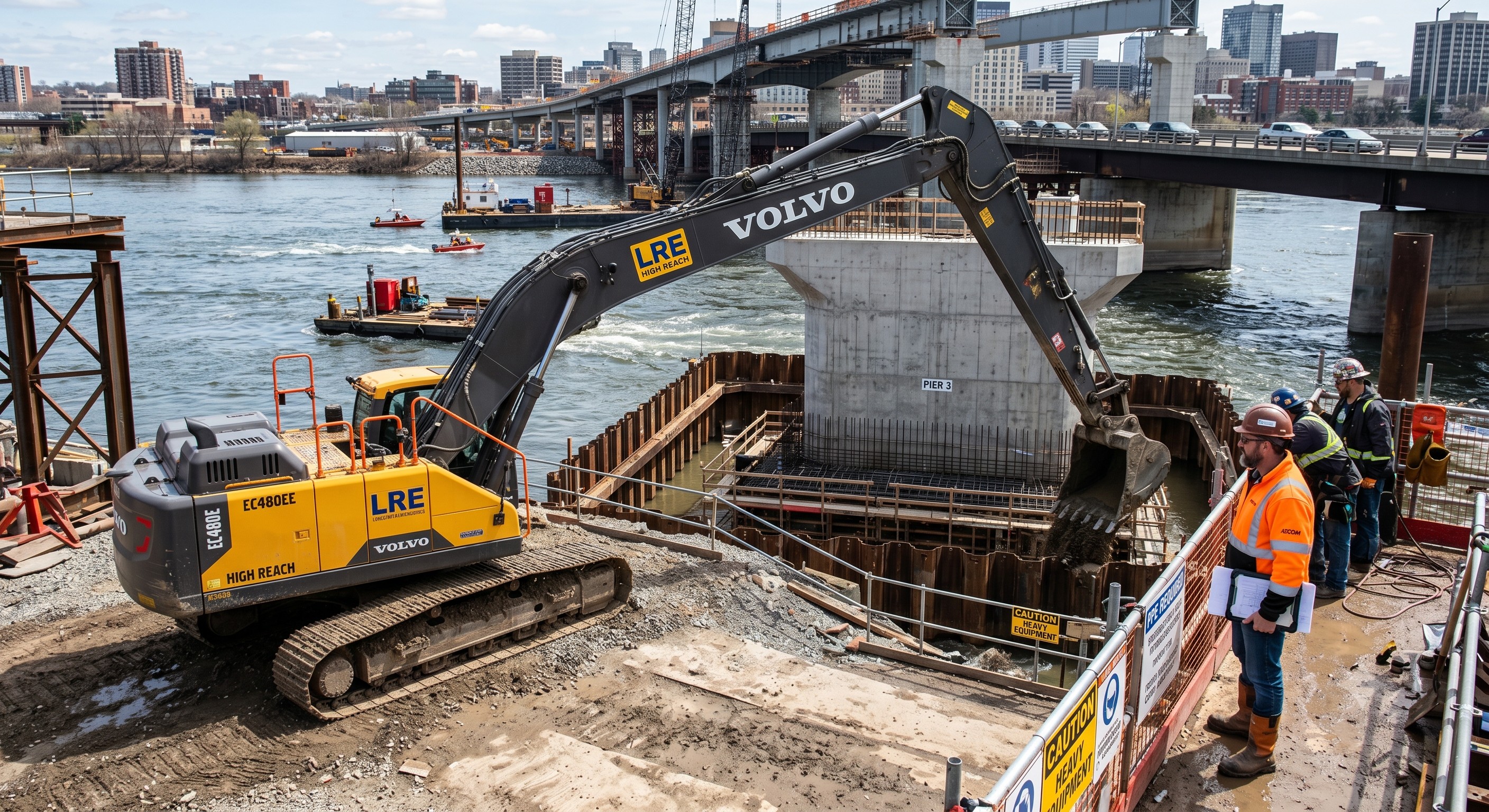
In the demanding field of bridge construction, the long reach excavator has become indispensable. These specialized machines, equipped with an extended boom and arm, provide the extended reach and depth required for deep foundations, pier work, and maintenance over water, where standard equipment often falls short. This FAQ addresses the most pressing technical and operational questions for B2B fleet and procurement managers, focusing on the specific advantages and requirements of integrating a long reach excavator into your heavy machinery fleet.
Frequently Asked Questions
Q1: What is the typical maximum reach and payload of a long reach excavator for bridge construction?
The typical maximum horizontal reach for a long reach excavator used in bridge construction ranges from 60 to 100 feet, with vertical digging depths often exceeding 60 feet. While the extended boom provides incredible reach, its payload capacity—the maximum weight the machine can lift at full extension—is significantly reduced compared to a standard excavator of the same base weight class. This reduction in lifting force is a key trade-off for the longer reach, meaning operators must be precise and avoid overloading the arm at its maximum radius.
Q2: What are the primary operational advantages of using a long reach excavator over a standard excavator on a bridge site?
The primary advantage is the ability to work from a safe distance, which is critical for operations over water, near deep excavations, or when demolishing old bridge structures. This enhanced safety allows operators to remain on stable ground or an elevated surface while performing tasks like deep pier foundation excavation, riverbed preparation, and underwater debris removal. Furthermore, the extended reach reduces the need to reposition the machine frequently, improving overall site efficiency and reducing ground disturbance, which is vital for protecting environmentally sensitive areas.
Q3: How does the engine performance and emissions compliance of long reach excavators impact B2B procurement decisions?
Modern long reach excavators are equipped with high-performance, new-generation environmental engines that deliver low fuel consumption and high power, often meeting stringent Tier 4 Final and Stage V emissions standards. For procurement managers, this means choosing a model with a proven, fuel-efficient engine can significantly reduce operating costs over the machine's lifespan, with some advanced models achieving up to a 10% reduction in fuel consumption compared to previous generations. Compliance with current emissions regulations is also a non-negotiable factor for projects in regulated regions, ensuring smooth project approval and avoiding potential fines.
Q4: What attachment compatibility options are available for long reach excavators?
The versatile long reach excavator supports a wide range of attachments to handle diverse tasks on a bridge construction site. Common attachments include heavy-duty buckets for dredging and deep excavation, hydraulic hammers for concrete demolition, and specialized grapples for material handling and debris cleanup. Quick coupler systems allow for efficient switching between attachments, enhancing the machine's utility from foundation work to final bridge abutment construction and maintenance.
Q5: What is the standard maintenance interval for a long reach excavator, particularly for its extended hydraulic systems?
The standard maintenance interval for a long reach excavator is comparable to standard excavators, often based on engine hours (e.g., every 250, 500, or 1,000 hours), but with a critical emphasis on inspecting and maintaining the extended boom and hydraulic systems. Due to the increased stress placed on the longer arm and hydraulic lines, more frequent visual inspections and lubrication of pivot points are essential. It is recommended to consult the specific manufacturer's manual for the model, but preventative maintenance should include regular checking of hydraulic fluid levels and filters, as the extended reach puts more strain on the entire hydraulic circuit.
Q6: How often does the hydraulic fluid need to be replaced in a long reach excavator?
The hydraulic fluid in a long reach excavator typically requires replacement every 1,000 to 2,000 operating hours, but this interval can vary based on the machine's model, operating conditions, and the type of hydraulic fluid used. For machines working in the demanding environments typical of bridge construction—which can expose them to water, dust, and extreme stresses—more frequent fluid sampling and analysis are advised. This proactive approach helps prevent premature wear in the hydraulic components of the extended boom and main hydraulic system, ensuring reliable operation and extending the machine's service life.
Q7: What are the critical spare parts to stock for a long reach excavator to minimize downtime?
To minimize downtime on critical bridge projects, fleet managers should maintain a strategic inventory of high-wear spare parts. Key components to stock include hydraulic filters, hydraulic hoses, and seals, which are subject to high stress in the extended boom system. Additionally, it is prudent to have wear parts like bucket teeth, cutting edges, and pins and bushings readily available. Ensuring access to these common replacement parts can significantly reduce service delays and keep the project on schedule.
Q8: What safety and stability features are crucial for long reach excavators used near water?
Safety is paramount, particularly for bridge construction over water, and long reach excavators incorporate several crucial features to mitigate risks. A wide, stable undercarriage and optimized counterweight design are essential to maintain balance and prevent tipping when the machine is working at full extension. High-visibility cabs with excellent sightlines, along with integrated 360-degree camera systems and proximity sensors, allow operators to work safely and avoid hazards below. Furthermore, ROPS-certified cabs and sturdy access systems protect the operator in case of an accident.