

Introduction: The Need for Speed in Port Logistics
In the high-stakes world of global trade, port efficiency is the linchpin of supply chain velocity. Terminals face immense pressure to reduce vessel turnaround times and optimize yard operations. Traditional material handling methods often struggle to keep pace with the ever-increasing volume of bulk cargo and containers. The solution lies in deploying robust, high-performance heavy machinery designed specifically for these harsh environments. Large excavators, equipped with specialized attachments and advanced powertrains, have emerged as a cornerstone of modern port handling, delivering significant gains in speed and operational throughput. This article provides a technical deep dive into how these engineering marvels accelerate port handling, enhance productivity, and offer a compelling return on investment.
Core Powertrain & Structural Design: The Heart of High-Speed Handling
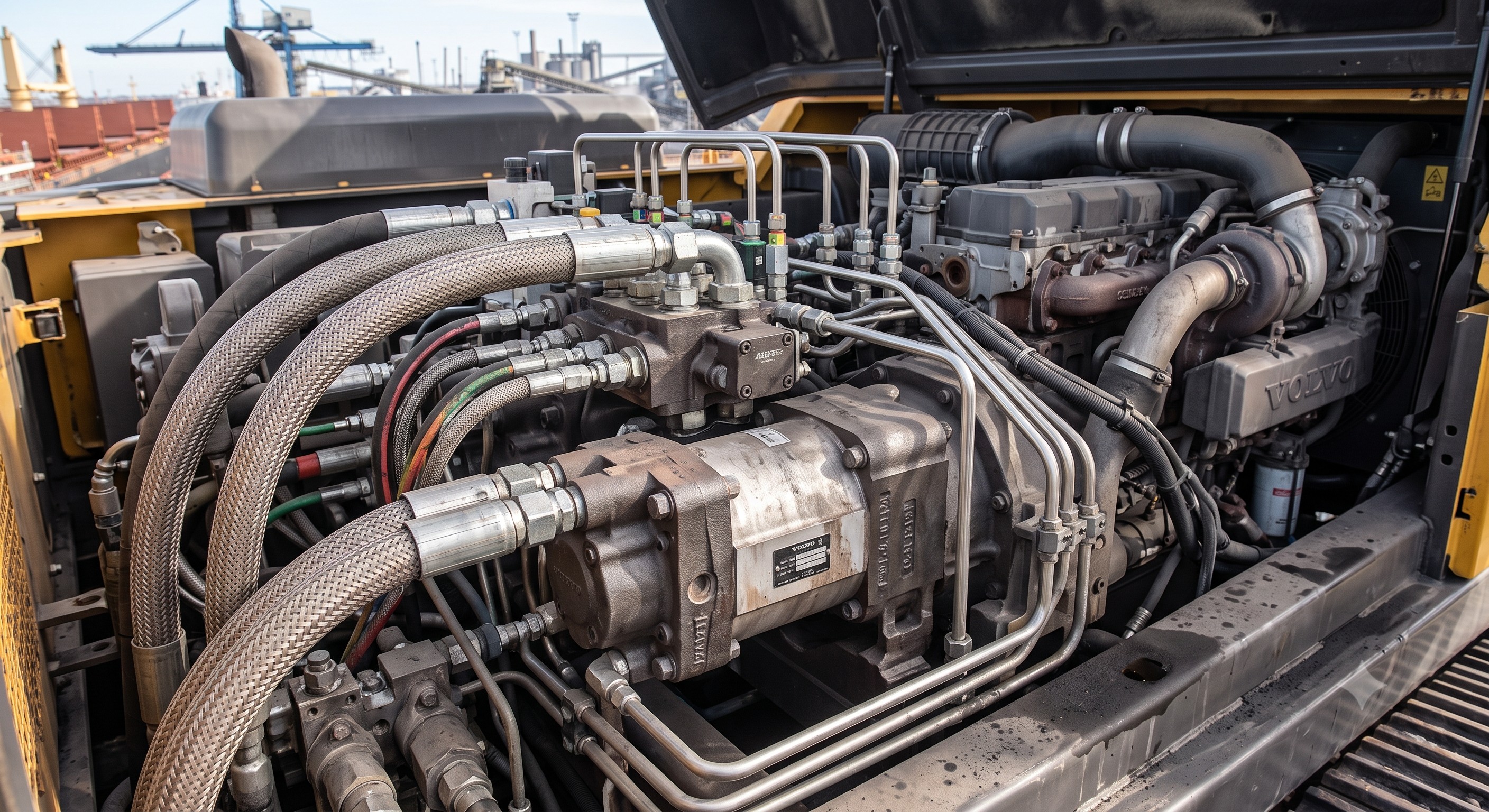
The ability of a large excavator to maintain high cycle speeds in a port environment is a direct result of its meticulously engineered powertrain and structural design. These machines are not merely scaled-up construction excavators; they are purpose-built for the unique demands of continuous, high-intensity material handling.
Engine and Hydraulic System
At the core of a high-performance port excavator lies a powerful, emission-compliant engine. For instance, the Cat® C13 ACERT™ engine in the 349F model delivers 396 hp (295 kW) of net flywheel power while meeting stringent U.S. EPA Tier 4 Final and EU Stage V emission standards . However, brute force alone is insufficient; it is the synergy between the engine and the hydraulic system that dictates speed. Advanced electro-hydraulic systems, such as those found in the Volvo EC550E, offer a 20% increase in productivity by optimizing the flow and pressure of hydraulic fluid to the implements . The maximum flow rate is a critical metric; the Cat 349F, for example, boasts a total main system flow of 203 gpm (770 L/min), ensuring rapid boom, arm, and bucket movements . This high-flow system, combined with pressures reaching 5,076 psi (35,000 kPa) for implements and travel, translates to lightning-fast cycle times, which is vital for quick vessel unloading and yard stocking.
Chassis and Durability
Port operations are notoriously punishing on machinery, with constant exposure to corrosive saltwater environments and abrasive materials. To ensure continuous uptime, a large excavator's undercarriage and chassis are built for supreme durability. The operating weight of these machines, often exceeding 50 tonnes, contributes directly to stability during heavy lifts. For example, the Kobelco SK850LC has a base operating weight of 80,800 kg, providing a solid foundation for handling massive loads . The robust undercarriage design, featuring sealed and lubricated track chains and heavy-duty rollers, minimizes wear and extends component life. Furthermore, compliance with safety standards like ISO 12117-2 for ROPS/FOPS (Roll-Over Protective Structure / Falling Object Protective Structure) ensures operator safety in the demanding port environment, contributing to a more focused and efficient workforce.
Technical Specifications
The following table provides a comparative overview of key technical specifications for leading large excavators used in port handling, illustrating the performance metrics that drive speed and productivity.
| Key Parameter | Technical Specification |
|---|---|
| Engine Power (Net) | 200 - 400+ hp (149 - 298+ kW) |
| Operating Weight | 30 - 80+ tonnes (66,000 - 176,000+ lbs) |
| Hydraulic System Flow | > 700 L/min (Main System) |
| Max. Pressure (Implements) | Up to 35,000 kPa (5,076 psi) |
| Emission Standard | EPA Tier 4 Final / EU Stage V |
| Fuel Tank Capacity | 600 - 960+ Litres |
Comparative Advantage: ROI and Productivity Analysis
When evaluating equipment for port operations, the initial purchase price is only one factor. The true measure of value is the Total Cost of Ownership (TCO) and the resulting Return on Investment (ROI). Large excavators offer a compelling advantage over alternative solutions like smaller wheel loaders or traditional gantry cranes for specific bulk material handling tasks.
Fuel Efficiency & Operational Costs
Modern large excavators are engineered for fuel efficiency without sacrificing power. The Volvo EC550E, for instance, is reported to deliver a 25% improvement in fuel efficiency over previous models . Some manufacturers are pushing the boundaries further with hybrid technology. The Komatsu HB365LC-3 hybrid excavator captures energy during the swing cycle and stores it in an ultra-capacitor, which is then used to power the electric swing motor and assist the engine, significantly reducing fuel consumption . Furthermore, the emergence of fully electric material handlers like Liebherr's LH 40 M Port E and LH 60 M High Rise Port E points to a future of emission-free, low-noise, and low-maintenance port operations, dramatically reducing operating costs .
Productivity and Throughput
Speed and efficiency are the pillars of port productivity. A large excavator's ability to perform rapid, precise movements results in measurable throughput gains. While fully automated terminals using Ship-to-Shore (STS) cranes and Automated Guided Vehicles (AGVs) are setting records, like the 62.62 TEUs per hour achieved by Qingdao Port , large excavators offer a flexible and cost-effective solution for bulk cargo and breakbulk operations. For example, the XCMG YGZ 520-8 material handler, with its 3m³ grab volume and 360-degree grab rotation, can rapidly cycle between ship holds and stockpiles . Machines like the LH 60 M High Rise Port E, with a reach of over 23 meters, can efficiently service larger vessels, minimizing the need for repositioning and maximizing the number of cycles per hour .
Heavy-Duty Application Scenarios
The versatility of large excavators allows them to be adapted to a wide range of demanding port applications through the use of specialized attachments.
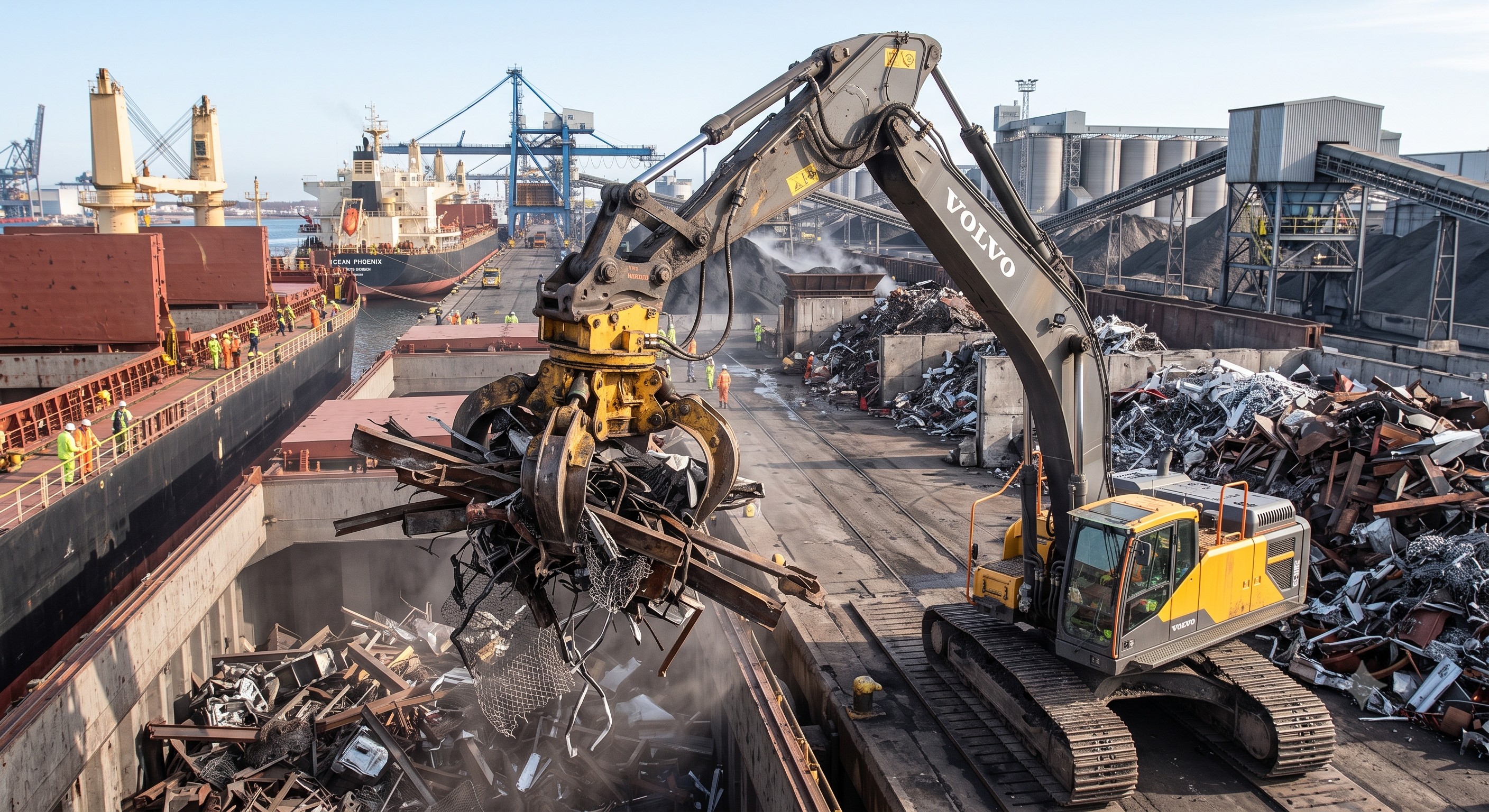
- Bulk Material Handling: Equipped with orange peel grabs or bulk material grabs, large excavators efficiently unload coal, grain, ores, and aggregates from vessels. The Liebherr LH 60 M High Rise Port E can be configured with bulk grabs ranging from 3.00 to 8.00 m³, making it ideal for high-volume operations .
- General Cargo Handling: Timber, steel coils, and other breakbulk cargoes are handled with precision using specialized grabs and grapples, improving safety and speed compared to sling-based methods.
- Container Handling: While specialized reach stackers and empty container handlers are common, large excavators can be fitted with spreader attachments for handling empty or light-loaded containers, particularly in terminal areas where they support primary yard equipment .
- Ship Dressing and Maintenance: Beyond cargo handling, these machines are used for general maintenance tasks, such as moving heavy ship fenders, clearing debris, and assisting with repairs.
Conclusion: The Future of Port Productivity
As global ports continue to densify and strive for greater efficiency, the role of high-performance heavy machinery is set to expand. Large excavators are evolving with advanced automation, telematics for predictive maintenance, and alternative power sources like electric and hybrid drives . Their ability to provide a potent combination of speed, power, and versatility makes them indispensable for meeting the growing demands of modern port logistics. By investing in these technologically advanced machines, port operators can achieve significant gains in handling speed, reduce their carbon footprint, and secure a formidable competitive advantage in the fast-paced world of international trade.