

Introduction: The Landscape Contractor's Challenge
In the modern landscaping industry, the demand for precision, efficiency, and minimal site disruption has never been higher. Contractors face the constant challenge of navigating tight residential spaces, preserving existing hardscapes, and delivering complex earthmoving tasks with smaller crews. The solution to these pain points often lies in a remarkably capable machine: the micro excavator. As the smallest class of hydraulic excavators, typically weighing under 1,500 kg and capable of fitting through standard doorways (as narrow as 762 mm), these machines are engineered to operate where larger equipment simply cannot reach . This blog provides a highly technical, data-driven exploration of the best uses for a micro excavator in landscaping, focusing on core engineering principles, operational efficiency, and return on investment (ROI).
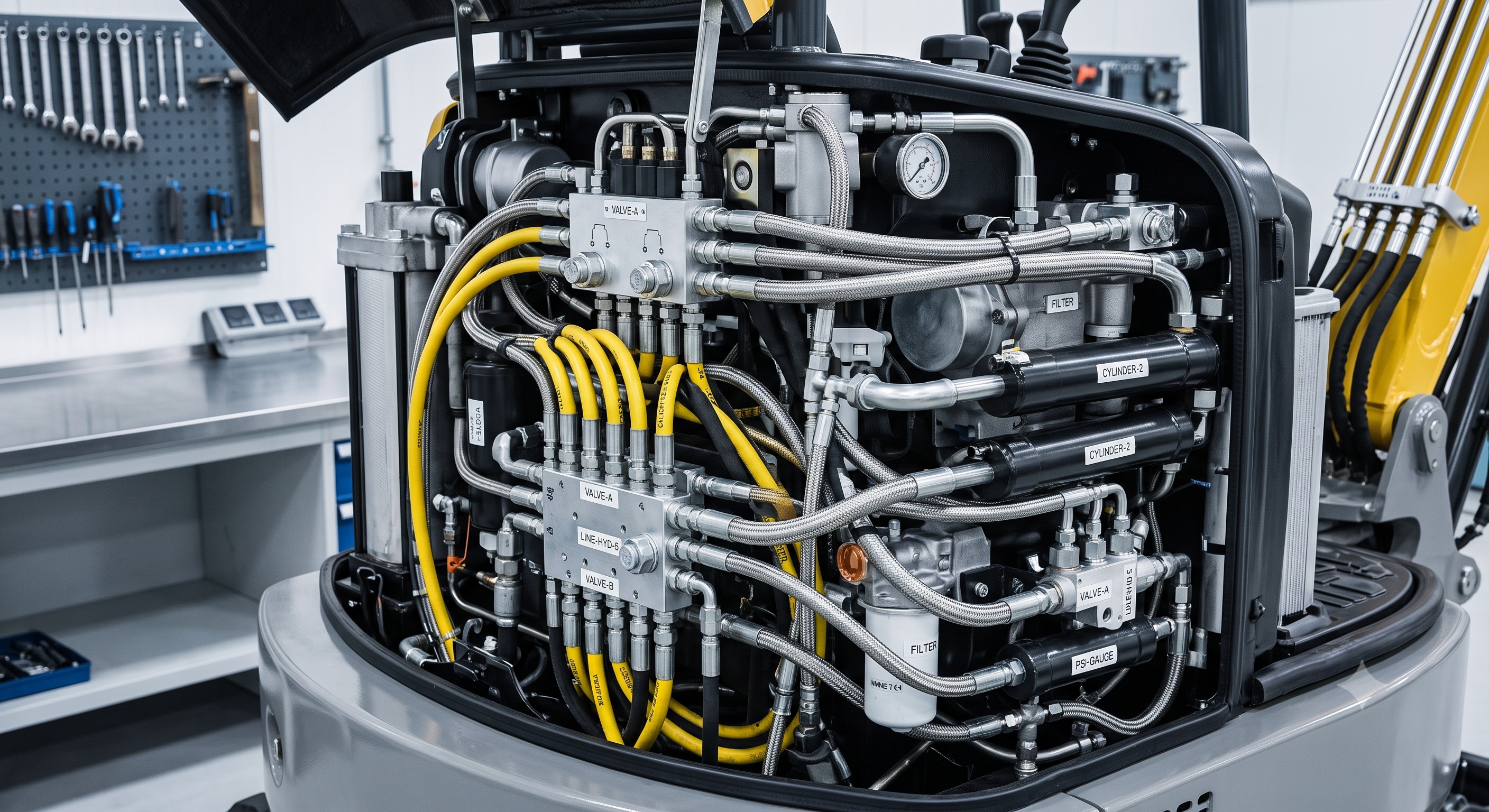
Core Powertrain & Structural Design: Engineering for Precision
The efficacy of a micro excavator in landscaping hinges on its sophisticated powertrain and robust structural design. The heart of the machine is a compact, high-efficiency engine designed to meet stringent emission standards.
Engine and Emission Compliance
Most diesel-powered micro excavators feature engines that comply with EPA Tier 4 / EU Stage V emission regulations, ensuring low environmental impact. Typical engine output ranges from 10 to 16 horsepower (HP), providing ample power for hydraulic systems . The modern trend towards electrification is also prominent, with models like the JCB 8008E CTS using a 9.9 kWh lithium-ion battery pack to deliver a full working day of operation with zero emissions and significantly reduced noise levels (as low as 66 dB at the operator station) .
Hydraulic System
The hydraulic system is the nervous system of the excavator. It is responsible for translating engine power into productive work. Micro excavators utilize variable-displacement piston pumps that deliver precise hydraulic flow and pressure, often exceeding 150 bar, to the boom, arm, and bucket cylinders. This enables smooth, proportional control critical for delicate landscaping tasks. Key design features include Zero Tail Swing (ZTS) or Zero House Swing (ZHS) configurations, which keep the machine's rear and upper structure within the width of the tracks during rotation, preventing costly damage to walls and structures .
Technical Specifications: A Comparative Overview
The following table illustrates the typical technical parameters for a micro excavator in the 0.8 to 1.9-tonne class, suitable for a wide range of landscaping applications. These specifications vary by manufacturer, but the data provided represents industry standards from leading OEMs.
| Key Parameter | Technical Specification |
|---|---|
| Engine Horsepower | 10 - 16 HP (Compliant with EPA Tier 4 / EU Stage V) |
| Operating Weight | 950 - 1,900 kg |
| Overall Width (Retracted) | 700 - 760 mm |
| Overall Width (Expanded) | 980 - 1,200 mm |
| Tail Swing | Zero Tail Swing (ZTS) / Zero House Swing (ZHS) |
| Hydraulic Pressure (Pilot) | 30 - 40 bar |
| Fuel / Battery Capacity | Lithium-Ion: 9.9 kWh / Diesel: 15 - 20 L |
| Noise Level (Operator) | 66 - 75 dB |
Comparative Advantage: Micro vs. Manual Labor and Larger Equipment
The primary advantage of deploying a micro excavator lies in its ability to replace labor-intensive manual tasks and offer superior total cost of ownership (TCO) compared to larger machinery.
- Total Cost of Ownership (TCO): Micro excavators are significantly less expensive to purchase and transport than their larger mini excavator counterparts. Fuel consumption is minimal, and maintenance requirements are reduced due to simpler systems .
- ROI Analysis: A micro excavator can complete trenching or planting tasks in one hour that would take a crew a full weekend, effectively paying for itself on a single project . With operating weights often under 1 tonne, they cause minimal ground disturbance, protecting existing lawns and paved surfaces .
- Enhanced Efficiency: Compared to manual labor, micro excavators increase work output by over 500% on standard digging tasks. Their ability to fit through a standard 700 mm wide doorway allows them to access confined backyards and indoor spaces, a logistical impossibility for larger equipment .
Heavy-Duty Application Scenarios in Landscaping
Micro excavators are the ultimate multitool for the modern landscaper. Their versatility is unlocked through a range of attachments, including buckets, augers, and breakers. Here are the most impactful applications.
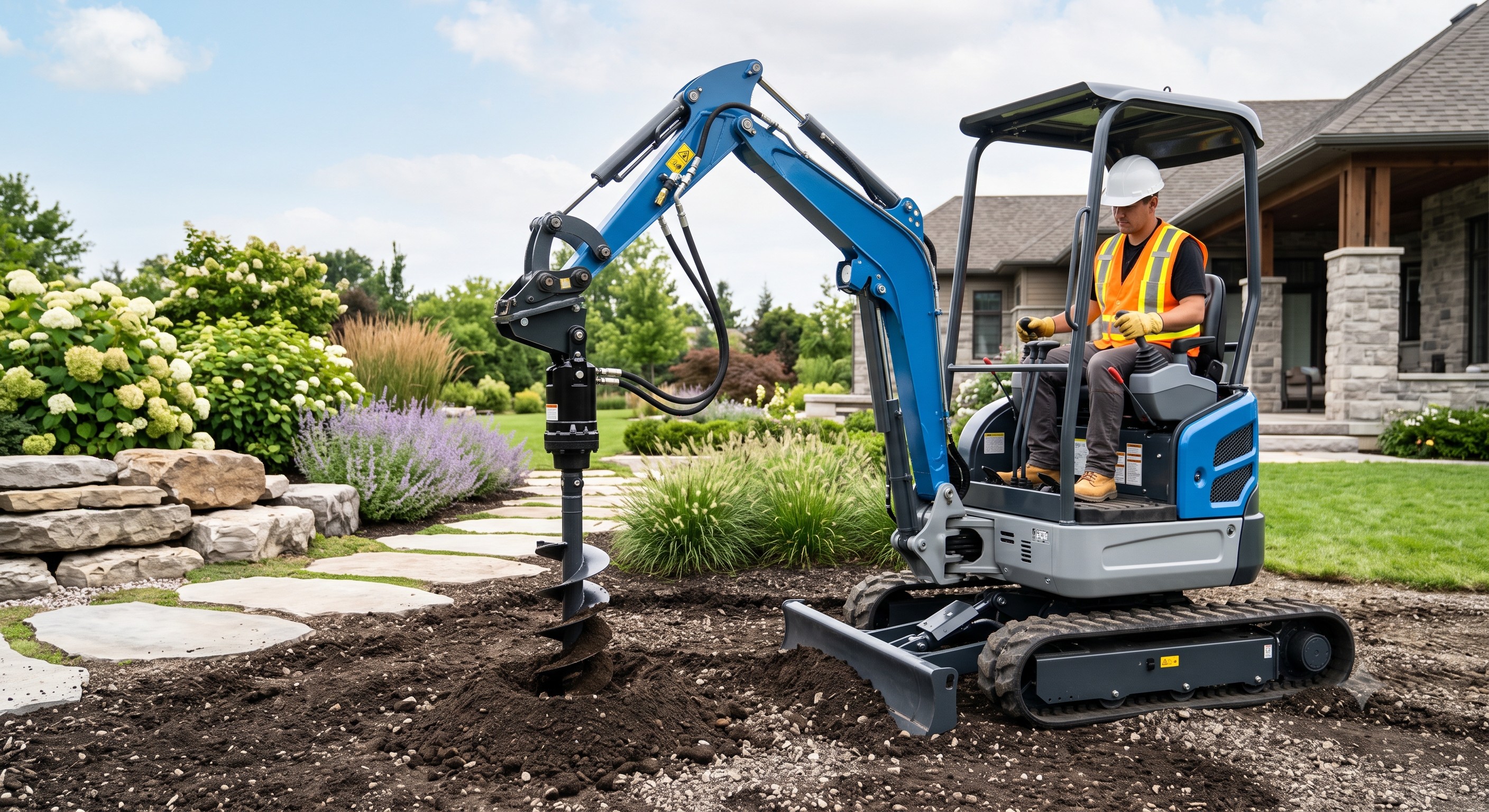
Precision Trenching for Utilities and Drainage
Installing irrigation systems, drainage pipes, and electrical conduits requires narrow, precise trenches. A micro excavator equipped with a dedicated trencher attachment cuts clean walls, minimizing backfill and restoration work. The machine's dozer backfill blade is then used to speedily refill and compact the trench in layers, ensuring uniform stability and load-bearing capacity .
Tree and Shrub Planting
Planting orchards or establishing new landscapes involves repetitive, physically demanding hole digging. By utilizing an auger attachment, a micro excavator can bore perfectly sized holes for fence posts or tree rootballs in minutes. This application demonstrates the machine's ability to handle large-scale planting projects efficiently, reducing operator fatigue and increasing productivity .
Terrain Grading and Site Preparation
Before laying turf, paving, or constructing hardscapes, precise grading is essential. The integrated dozer blade on a micro excavator is ideal for this task. Operators can adjust the blade angle to match the desired slope, pushing soil and leveling terrain with high accuracy. Adding a tilt coupler and a grading bucket further refines the final surface, achieving results previously only possible with skid-steer loaders .
Material Handling and Lifting
Micro excavators are highly effective for moving heavy materials like mulch, soil, and decorative stone. A bucket with a hydraulic clamp or thumb attachment allows the operator to securely grip and place irregularly shaped objects, such as large boulders for rock gardens or heavy retaining wall blocks . This capability makes the machine indispensable for hardscaping and material loading tasks.
Conclusion: The Future of Sustainable and Efficient Landscaping
The micro excavator has revolutionized the landscaping industry, offering a compelling combination of power, precision, and sustainability. By replacing manual labor and enabling access to the most confined urban and residential spaces, these machines deliver measurable ROI and unmatched project efficiency. The ongoing electrification of this equipment segment further solidifies its role as the future of sustainable landscaping, reducing site noise and eliminating emissions. For the forward-thinking contractor, a micro excavator is not just a machine; it is a strategic asset that transforms operational capability and drives business growth.