
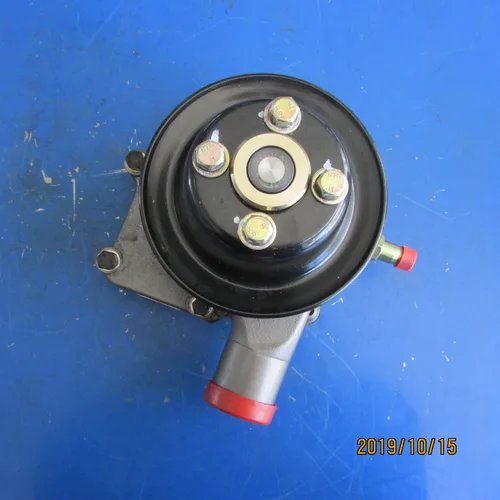
XCMG 860109755 Water Pump – Drawing 6QAJ-1307010, for Yuchai YC6105 Series
الحد الأدنى للطلب: 1 قطع
- Material code::
- 860109755
- Material Description::
- Pump (YC6105) 6QAJ-1307010 (spare part) RZ
- السعر المرجعي:
- USD $75.00
- الحد الأدنى لكمية الطلب:
- 1 قطع

ميزات المنتج وتطبيقاته
This Water Pump 860109755 is a core component of the cooling system for Yuchai YC6105-series diesel engines. Adopting a belt-driven centrifugal structure, it pumps coolant from the radiator into the engine block and cylinder-head water jackets to maintain thermal balance.XCMG LW300FN
A water pump (also called cooling water pump or centrifugal pump) is the core actuator of a diesel engine's forced-circulation cooling system, mounted at the front of the engine block and driven by the crankshaft pulley via the fan belt . Its working principle: the rapidly rotating impeller generates centrifugal force, drawing coolant from the inlet into the pump chamber, accelerating it through the volute, and pressurizing it out through the outlet into the block water jacket, then through the cylinder head, thermostat, and radiator for heat exchange before returning—forming a closed loop .
A typical centrifugal water pump consists of a pump body, impeller, pump shaft, bearing, water seal, mechanical seal, pulley, and flange . The body is usually cast iron or aluminum alloy; the impeller, made of stamped steel, cast iron, or resin, flings coolant into the water jacket when rotating ; the shaft end carries a mechanical seal (rotating/stationary ring structure) to prevent coolant leakage along the shaft ; the pump body typically features a weep hole at the bottom—minor seepage here during early water-seal wear serves as a warning sign; continuous dripping indicates seal failure requiring replacement .
المواصفات الفنية
- Material code:
- 860109755
- Material Description:
- Pump (YC6105) 6QAJ-1307010 (spare part) RZ
مواصفات التجارة
- السعر المرجعي
- USD $75.00
- الحد الأدنى لكمية الطلب
- 1 قطع

Xuzhou Hengming Machinery Equipment Co., Ltd.
Rooted in Xuzhou, the birthplace of XCMG brand and the core national industrial cluster for construction machinery, Xuzhou Hengming Machinery Equipment Co., Ltd. has long focused on the supporting spare parts industry for XCMG construction machinery. We hold official import and export business qualifications, and serve as a one-stop source supplier of spare parts for global XCMG equipment users.
- الموقع
- Room 115, D32# Block 1, Huaihai Hardware & Electromechanical Market, East Sanhuan Road, Xuzhou Economic & Technological Development Zone, Jiangsu Province, China
- الموظفون
- Less than 50 People
- مساحة المصنع
- 1,000-5,000 m²
- الإيرادات السنوية
- US$1 Million - US$5 Million
- الأسواق الرئيسية
- Europe / Middle East & North Africa / Africa