
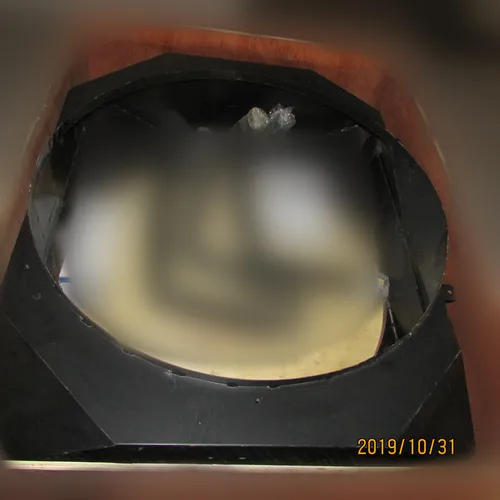
Radiator Fan Shroud 860149111 | XGSX01-127, XCMG LW800K Loader Cooling System Spare
الحد الأدنى للطلب: 1 قطع
- Material code::
- 860149111
- Material Description::
- XGSX01-127 Water Tank Windshield 6720160
- السعر المرجعي:
- USD $110.00
- الحد الأدنى لكمية الطلب:
- 1 قطع

ميزات المنتج وتطبيقاته
This Radiator Fan Shroud 860149111 is an air-guiding component in the cooling system of XCMG loaders, associated with drawing number XGSX01-127, with the user notation "6720160". Third-party supply listings suggest an association between this part number and "XCMG LW800K parts" , but that listing's fitment is only the generic phrase "construction machinery (domestic) / XCMG"—so the correspondence between 860149111 and this drawing number, and between this part and specific XCMG loader models, cannot be confirmed from public sources. Research on loader cooling-system thermal balance shows that optimizing the fan shroud (air deflector) significantly improves the system's heat dissipation: sealing the gaps on both sides of the radiator yields about 2℃ improvement, hood-structure optimization yields 4–5℃, and adding a deflector at the radiator outlet increases air intake . Specific overall dimensions, mounting-hole pattern, and applicable models should all be confirmed against the nameplate, drawings, or sample before ordering.
A radiator fan shroud (also called air deflector, fan guard, or fan shroud) is an air-guiding component in a loader's engine cooling system, mounted between or around the radiator (water tank) and the cooling fan. It constrains the airflow direction generated by the cooling fan, maximizing the passage of fan-drawn cold air through the radiator core to minimize backflow and bypass losses, thereby improving heat dissipation. It serves as both a structural connecting piece for the radiator module and an air-guiding element for the cooling duct, playing a key role in the loader's overall thermal balance.
Key role in loader cooling-system thermal balance (based on industry public research, as background reference for this part, not specific to this item):
-
Reducing backflow (return air): Research on loader cooling-system thermal balance identifies "reducing backflow" as one of the two main directions for improving cooling capacity, with specific measures including optimizing hood structure, filling gaps between the radiator and hood with sealant, and adding a deflector at the radiator outlet . The fan shroud is the core hardware carrier among these measures.
-
Quantified heat-dissipation gains: The same research, through CFD analysis and simulation-bench testing, provides a set of reference figures—sealing gaps on both sides of the radiator yields about 2℃ improvement, hood-structure optimization yields 4–5℃, and increasing the distance between the fan and diesel engine yields 3–5℃ improvement . These numbers show that the sealing and guiding state of the fan shroud and its surroundings directly affects the machine's water-temperature performance under high-load, high-temperature conditions.
-
Real-world fault case: In a publicly documented high-water-temperature troubleshooting case for Shantui's SL50-series loaders, a machine that had worked for hundreds of hours saw its water temperature rise to 100℃; the final inspection found that "the distance between the radiator and the engine fan was too large, with the fan blade only reaching one-quarter of the way into the radiator deflector ring"—the fault was resolved by adjusting the radiator mounting-bracket hole positions and moving the radiator to reduce the distance to the fan . This case confirms that the relative position between the fan shroud/deflector ring and the fan is a key factor in normal cooling-system operation.
-
Retrofit directions: In similar loader cooling-improvement practices, common optimization measures also include reducing wind resistance to improve radiator and oil-cooler performance, filling gaps between the radiator and hood, adding a deflector at the radiator outlet, and optimizing deflector structure . As a shroud-class component, this part is one of the hardware touchpoints for the above improvements.
المواصفات الفنية
- Material code:
- 860149111
- Material Description:
- XGSX01-127 Water Tank Windshield 6720160
مواصفات التجارة
- السعر المرجعي
- USD $110.00
- الحد الأدنى لكمية الطلب
- 1 قطع


Xuzhou Hengming Machinery Equipment Co., Ltd.
Rooted in Xuzhou, the birthplace of XCMG brand and the core national industrial cluster for construction machinery, Xuzhou Hengming Machinery Equipment Co., Ltd. has long focused on the supporting spare parts industry for XCMG construction machinery. We hold official import and export business qualifications, and serve as a one-stop source supplier of spare parts for global XCMG equipment users.
- الموقع
- Room 115, D32# Block 1, Huaihai Hardware & Electromechanical Market, East Sanhuan Road, Xuzhou Economic & Technological Development Zone, Jiangsu Province, China
- الموظفون
- Less than 50 People
- مساحة المصنع
- 1,000-5,000 m²
- الإيرادات السنوية
- US$1 Million - US$5 Million
- الأسواق الرئيسية
- Europe / Middle East & North Africa / Africa