

Introduction: Addressing the Challenge of Waterway Sedimentation
Maintaining navigable waterways and mitigating flood risks are perennial challenges for civil engineering and municipal authorities. Traditional methods of river dredging often struggle with accessibility, environmental impact, and operational efficiency, particularly in shallow, soft-bottomed, or ecologically sensitive areas. Conventional land-based excavators cannot reach the water, while standard dredging barges are often too large, expensive, or cause excessive environmental disruption. This is where the specialized design of the amphibious excavator provides a robust and essential solution. These machines are engineered to operate in the challenging interface between land and water, offering a unique combination of mobility, precision, and low environmental impact that makes them indispensable for modern river dredging projects. By combining the digging power of a standard excavator with a buoyant, low-ground-pressure undercarriage, they can access and work in areas previously considered unreachable, providing a cost-effective and sustainable method for sediment removal and waterway restoration.
Core Powertrain & Structural Design
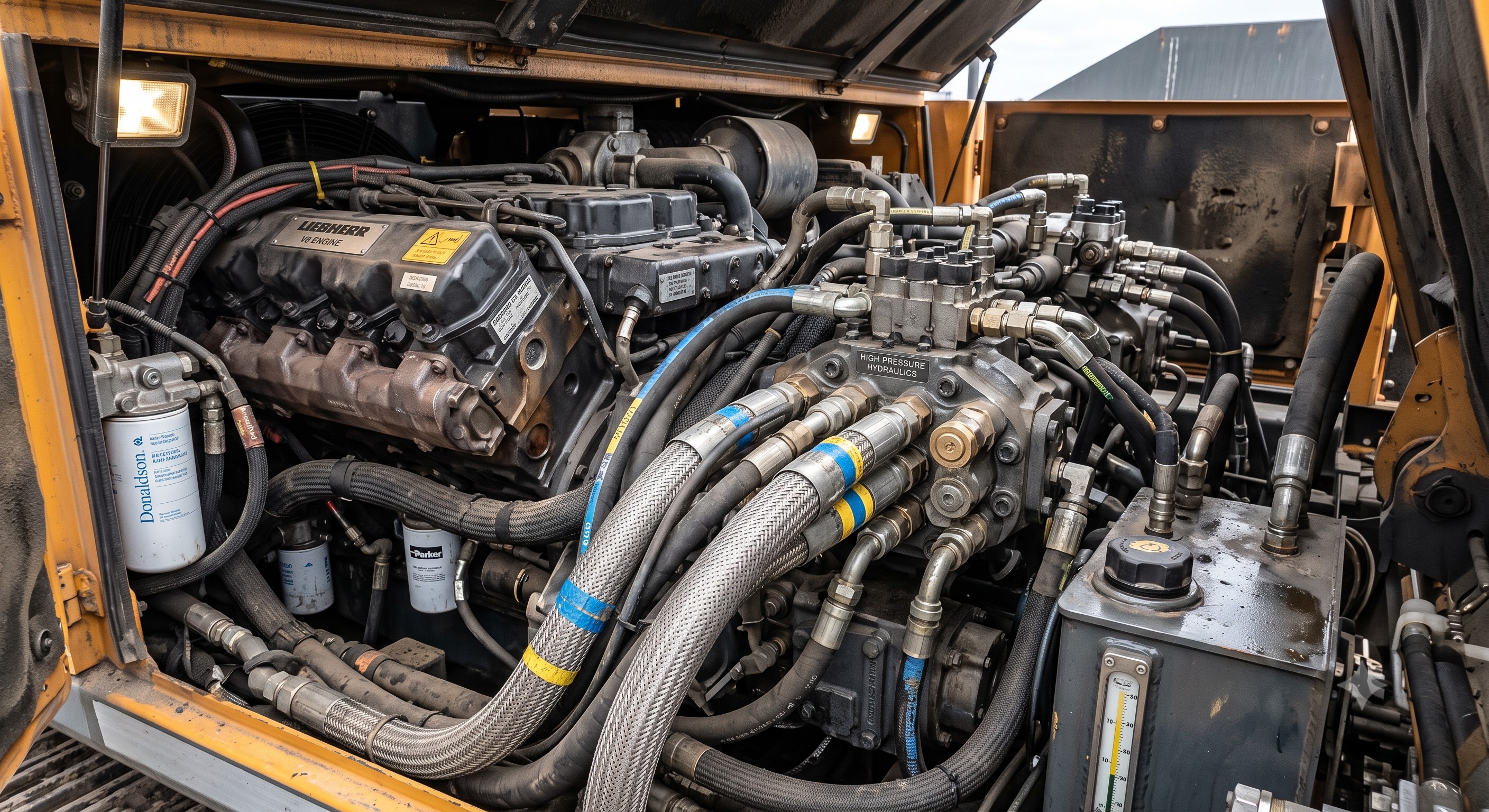
The efficacy of an amphibious excavator for river dredging lies in its sophisticated integration of standard heavy machinery components with specialized adaptations for aquatic and soft-terrain environments. The core design features a robust upper structure, which is typically a standard excavator cab, boom, and arm, mounted onto a custom-built amphibious undercarriage. This combination is engineered to deliver high performance while ensuring stability and flotation in challenging conditions.
Engine and Powertrain
Modern amphibious excavators are powered by high-performance, fuel-efficient diesel engines that comply with stringent emission regulations such as EPA Tier 4 / EU Stage V. For instance, a machine in the 20-23 ton class might feature an engine delivering approximately 106.5 kW of rated power . This power is crucial for operating the machine's demanding hydraulic systems and providing the tractive effort required to navigate through soft mud and water. The powertrain is often configured with a high-capacity cooling system to manage the increased thermal load from working in warm, humid environments and for extended periods of high-load operation.
Hydraulic System
The hydraulic system is the lifeblood of the amphibious excavator, providing the force for both the work group and the travel motors. These systems are designed for high efficiency and precision, often operating at pressures exceeding 5,000 psi to deliver maximum digging and lifting forces . Key hydraulic components include powerful main pumps that supply high-flow rates (e.g., up to 58 gal/min) to the arm, boom, bucket, and travel functions. Advanced systems often feature load-sensing technology that matches hydraulic flow and pressure to the task at hand, significantly improving fuel efficiency and reducing cycle times. The use of eco-friendly hydraulic oils is also becoming more common in sensitive environmental applications to mitigate any potential impact from leaks .
Chassis Durability and Undercarriage
The defining feature of an amphibious excavator is its undercarriage. Instead of conventional crawler tracks, it is equipped with large, sealed steel pontoons that provide the necessary buoyancy and flotation . These pontoons are constructed from high-strength, corrosion-resistant materials like Corten steel, often featuring multiple watertight compartments to ensure the machine remains afloat even in the event of damage . The massive surface area of the pontoons reduces the machine's ground pressure to less than 2.5 psi, a fraction of the 7-10 psi exerted by a standard excavator . This low ground pressure, combined with robust, multi-strand marsh tracks, allows the machine to traverse extremely soft, saturated soils and shallow water without sinking. The undercarriage is engineered for durability, with features like heavy-duty track chains, marine-grade aluminum cleats, and fully enclosed travel motors to protect against corrosion and impact damage . For deeper water operations, some models can be fitted with supplementary side pontoons to increase buoyancy and stability .
Technical Specifications
To appreciate the capabilities of these machines, it is essential to review key technical parameters. The following table provides a comparison of representative amphibious excavator models, illustrating the range of specifications available for different project scales .
| Key Parameter | Model A (Small) | Model B (Medium) | Model C (Large) |
|---|---|---|---|
| Engine Horsepower | 44.4 kW (59.5 HP) | 106.5 kW (143 HP) | ~132 kW (177 HP) |
| Operating Weight | 11,120 kg | 33,570 kg | ~24,000 kg |
| Bucket Capacity | 0.26 m³ | 0.93 m³ | ~0.8 m³ |
| Max. Digging Depth | 4.0 m | ~11.5 m | 14.6 m (with long front) |
| Ground Pressure | < 2.5 psi | < 2.5 psi | < 2.5 psi |
Comparative Advantage: ROI and Operational Efficiency
When evaluating heavy equipment for river dredging, the Total Cost of Ownership (TCO) and return on investment are critical factors. Amphibious excavators offer a compelling value proposition when compared to conventional alternatives such as land-based excavators with long-reach booms, barge-mounted excavators, or specialized cutter suction dredges.
Superior Accessibility and Mobility
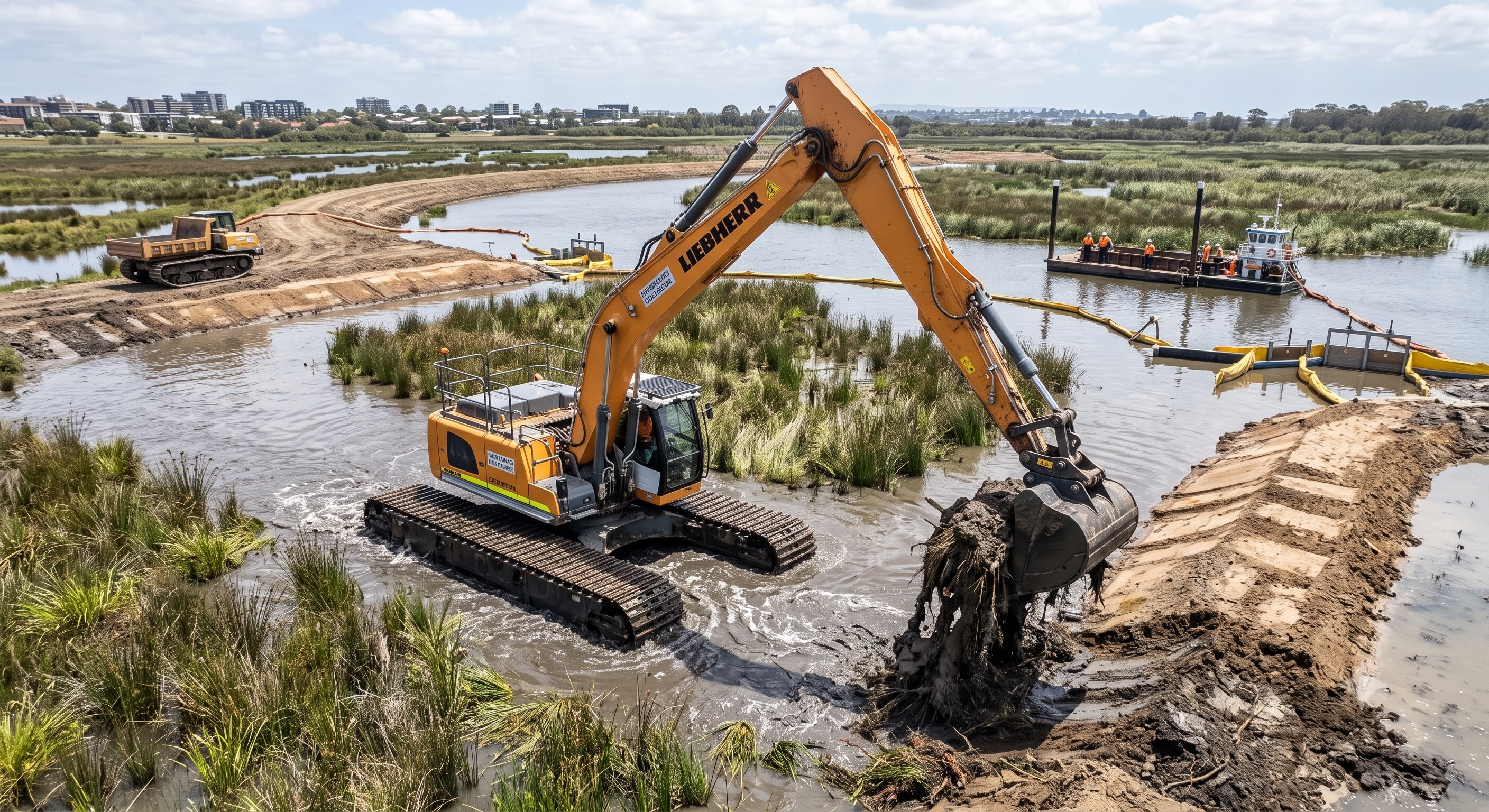
A conventional excavator is restricted to the riverbank, limiting its reach and effectiveness for dredging the main channel. Conversely, an amphibious excavator can work directly in the water, accessing the entire width of a river or waterway. This capability can reduce or eliminate the need for expensive temporary access roads, causeways, or cofferdams. Compared to barge-mounted dredgers, amphibious excavators are self-propelled and require significantly less setup time and support infrastructure, such as tugboats or anchoring systems . This leads to faster mobilization and demobilization, reducing project overhead.
Precision and Environmental Stewardship
For projects in sensitive ecosystems, the precision and low-impact operation of an amphibious excavator are invaluable. The ability to perform targeted excavation with a standard bucket or specialized attachments like dredge pump attachments minimizes over-dredging and reduces sediment plume generation . This contrasts sharply with large-scale hydraulic dredges, which can create significant turbidity and disturb benthic habitats. The low ground pressure of the amphibious excavator also means less damage to the banks and surrounding environment, making it a more sustainable choice for projects like wetland restoration and flood mitigation .
Fuel Efficiency and Cost-Effectiveness
While a large cutter suction dredge is more efficient for removing massive volumes of material in open water, for small to mid-sized river dredging projects, the amphibious excavator is often more cost-effective. It offers lower capital and operating costs, requires fewer support vessels, and consumes less fuel . Project timelines can also be dramatically shortened. For example, a pipeline repair project in the Quinnipiac River that was expected to take two months was completed in half the time using an amphibious excavator, demonstrating significant labor and cost savings . The machine's versatility to switch between dredging, bank shaping, and debris removal in a single shift maximizes its utilization rate, further enhancing ROI.
Heavy-Duty Application Scenarios
The unique capabilities of amphibious excavators make them the preferred choice for a wide range of heavy-duty applications beyond simple river dredging. Their versatility is enhanced by a variety of attachments, allowing them to function as a multi-purpose tool in challenging environments.
Construction and Infrastructure
In construction, these machines are invaluable for wet embankment work, pipeline installation in swampy terrain, and laying foundations for bridges, docks, and other waterfront structures . They can navigate unstable ground to place riprap for erosion control, construct levees, and perform shoreline stabilization without the need for expensive dewatering or piling. Their ability to carry and place materials like sandbags and rocks directly in the water streamlines operations and enhances worker safety.
Mining and Resource Development
In the mining sector, amphibious excavators are used for dredging mine tailings ponds, sand mining in river deltas, and accessing mineral deposits in marshy areas . Their robust construction and high flotation allow them to operate in the challenging conditions of sedimentation ponds and soft-bottomed lakes, recovering valuable materials that would otherwise be inaccessible.
Earthmoving and Flood Control
These machines are essential for large-scale earthmoving projects in waterlogged areas, such as watershed management and the creation of retention basins . They are frequently deployed for post-flood disaster recovery, clearing debris and dredging blocked channels to restore water flow and mitigate future flood risks. Their low ground pressure is particularly critical in these scenarios to avoid compounding environmental damage.
Manufacturing and Industrial Maintenance
Industrial facilities often require maintenance of settling ponds, cooling water intakes, and wastewater treatment lagoons. Amphibious excavators can be deployed to remove accumulated sludge and debris from these structures without interrupting operations, ensuring compliance with environmental discharge regulations .
Conclusion: Enhancing Industrial Productivity for the Future
In conclusion, the amphibious excavator is not just a piece of specialized equipment but an essential tool for modern river dredging and a wide array of heavy-duty applications. Its unique engineering—combining a powerful conventional excavator with a highly buoyant, low-ground-pressure undercarriage—directly addresses the core challenges of working in saturated and sensitive environments. The benefits are clear: unmatched accessibility to previously unreachable areas, superior cost-effectiveness and ROI for small to mid-sized projects, and the ability to perform precise work with minimal environmental disruption. As global pressures on water resources and infrastructure intensify, and as environmental regulations become more stringent, the demand for sustainable and efficient solutions like the amphibious excavator will only grow. Investing in this technology is a strategic move towards enhancing operational versatility, ensuring regulatory compliance, and driving long-term industrial productivity in the most challenging of environments. By integrating amphibious excavators into their fleets, contractors and engineering firms can unlock new capabilities and deliver superior outcomes on critical infrastructure and environmental restoration projects.