

Overview
Sourcing a mini excavator from an international supplier requires meticulous documentation to ensure regulatory compliance, operational readiness, and financial protection. For B2B procurement and fleet managers, understanding the required paperwork—from pre-sales certifications to post-sales maintenance records—is critical to avoiding costly delays, customs seizures, and operational downtime. This FAQ provides definitive answers on the essential documents needed for a successful transaction and long-term equipment support.
Frequently Asked Questions
Q1: What are the essential compliance documents required for importing a mini excavator?
The essential compliance documents are the Certificate of Origin, commercial invoice, packing list, bill of lading, and engine emissions compliance certificates specific to your destination market . For the United States, EPA Form 3520-21 is mandatory for diesel engines to verify Tier 4 Final compliance, and failure to provide this can result in the machine being seized and destroyed at the port . For the European Union, the supplier must provide a valid CE Declaration of Conformity and documentation proving EU Stage V emissions compliance; without these, the machine cannot be placed on the market .
Q2: What pre-sales documents should I request before paying a deposit to a mini excavator supplier?
Before paying a deposit, you must request a comprehensive document pack including a detailed Proforma Invoice, quality certifications (ISO 9001), and verifiable proof of compliance for your market . The Proforma Invoice should list the specific model, engine serial number, unit price, and bank wire details to prevent fraud . It is also critical to request EPA compliance labels or CE certificates, along with photos of the machine's engine tags and a pre-shipment inspection report or test video to verify real-world functionality and specification accuracy .
Q3: What is the standard maintenance interval for a mini excavator?
The standard maintenance interval for routine checks on a mini excavator is every 10 operating hours for daily inspections, with major service intervals occurring every 250, 500, and 1,000 hours depending on the component. Daily checks include inspecting the engine oil, hydraulic fluid levels, and undercarriage, while a comprehensive service involving oil and filter changes is typically performed every 250 hours of operation. The successful bidder in formal procurement processes is also required to provide a full set of parts, operator's, and shop manuals (often in paper and digital format) to define these schedules .
Q4: What hydraulic fluid and specifications are required for a new mini excavator?
Your mini excavator requires high-quality hydraulic fluid that meets the viscosity grade and performance standards specified in the supplier's operations manual, typically ISO VG 46 for temperate climates. The supplier must provide hydraulic system specifications, including pump flow rate and operating pressure, as part of the technical documentation to verify fluid compatibility . For attachment compatibility, ensure the auxiliary hydraulic system's flow rate (e.g., minimum 37 GPM for certain attachments) and pressure align with the attachments you plan to use, as this confirms the fluid power requirements are met .
Q5: What contract clauses and purchase documents protect buyers from delivery delays or specification errors?
To protect against delivery delays and specification errors, your purchase contract must include a detailed Product Specification Clause, a Delivery Time & Penalty Clause, and a Quality Inspection Clause . The specification clause should list the engine brand, bucket size, and auxiliary hydraulic plumbing in detail, as the rule is: 'if it's not written, it doesn't exist' . Additionally, the contract should stipulate a pre-shipment inspection by a third party and a delay penalty (e.g., 0.5% per week) to ensure the supplier is accountable for late delivery and non-conformance .
Q6: What shipping and logistics documents are mandatory for customs clearance?
The mandatory shipping documents for customs clearance are the Commercial Invoice, Packing List, and Bill of Lading, which must be submitted alongside the Importer Security Filing (ISF) at least 24 hours before the vessel is loaded . The Commercial Invoice must include detailed machine descriptions and value breakdowns, while the Packing List must adhere to ISPM 15 standards for wood packaging, requiring heat treatment and IPPC stamps to avoid costly port holds . For electric models, you must also provide the UN38.3 test report and Safety Data Sheet (SDS) because lithium batteries are classified as Class 9 Dangerous Goods .
Q7: What post-sales and spare parts documentation should I secure from the supplier?
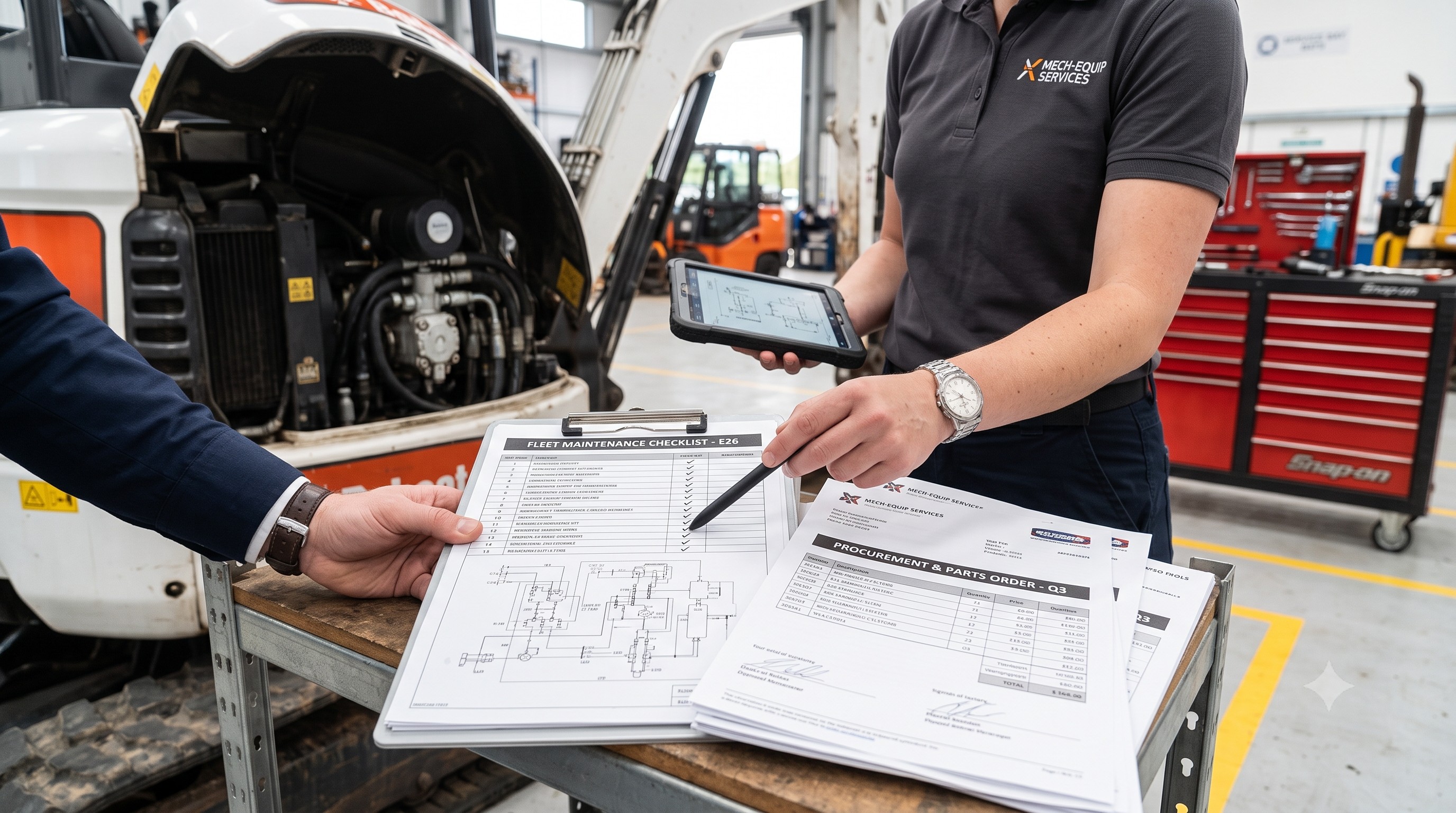
Post-sales, you must secure a detailed Spare Parts Catalog, a Warranty Policy document, and a Preventative Maintenance Schedule from the supplier to ensure long-term operational continuity . The warranty document should clearly state the coverage period (e.g., 24 months), response time for claims (e.g., within 24 hours), and who is responsible for shipping replacement parts . For fleet managers, requesting a list of recommended consumables for the first shipment is critical to ensuring parts availability and avoiding extended downtime .