

Introduction: Addressing the Productivity Bottleneck in Compact Construction
In modern construction, material handling, and industrial operations, project managers are increasingly plagued by a persistent challenge: the gap between the agility of small machinery and the brute force required for efficient earthmoving. While larger loaders are powerful, their operational costs and lack of maneuverability make them impractical for the majority of tasks on smaller job sites, in urban environments, or in material processing yards. The advent of the modern 5 ton Mini Loader represents a pivotal shift in this paradigm. It offers a robust, high-density power solution that delivers a significant return on investment (ROI) through a combination of compact design, optimized fuel efficiency, and substantial payload capability. This is not merely a downsized wheel loader; it is a purpose-built machine engineered to navigate confined spaces while providing a formidable 5-ton operating capacity, positioning it as a versatile backbone for modern industrial productivity.
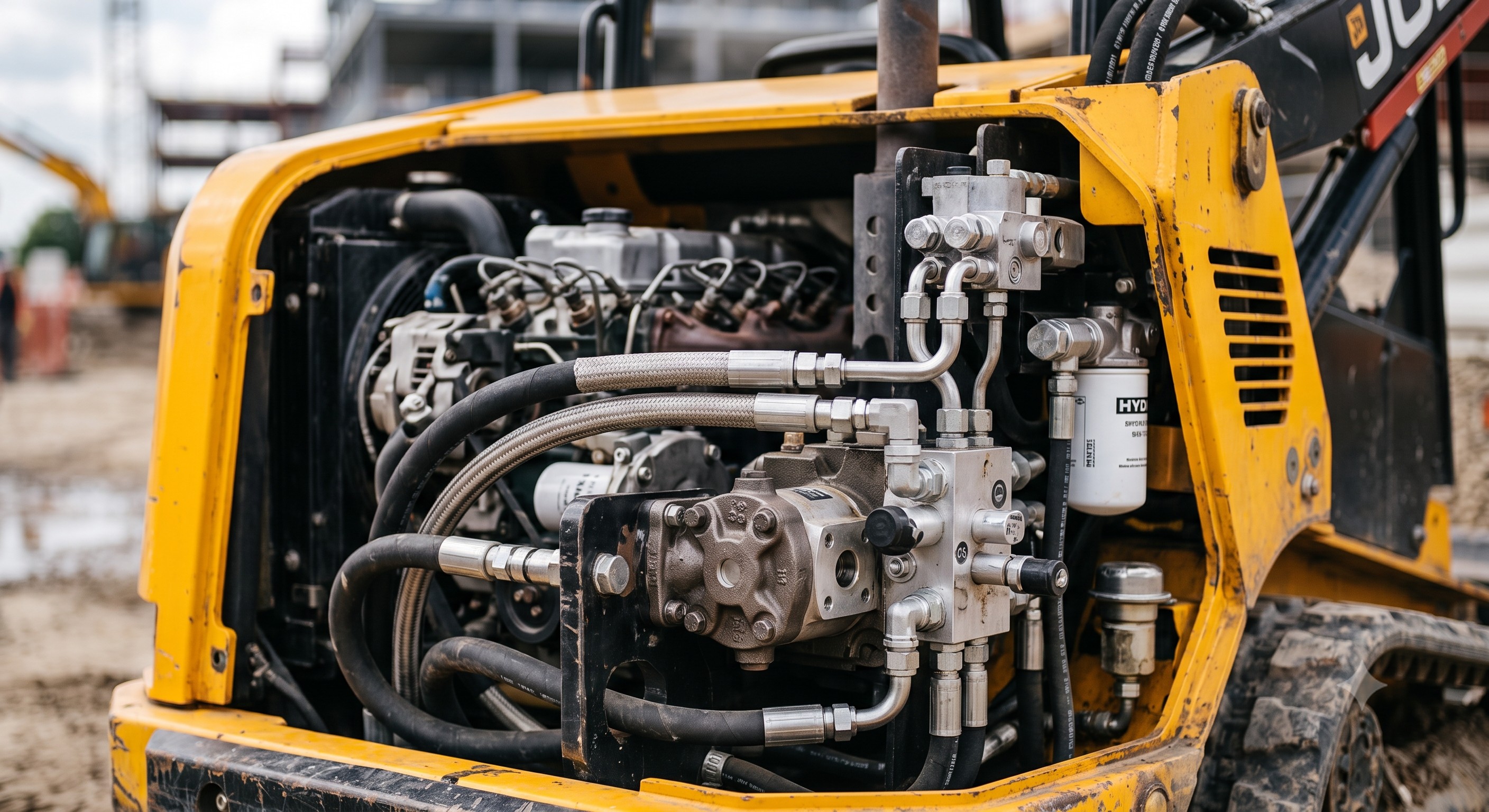
Core Powertrain & Structural Design
The engineering of a high-performance 5 ton Mini Loader necessitates a holistic approach to design, where the powertrain, hydraulic system, and structural frame operate in unison to deliver maximum efficiency and durability. Achieving a 5-ton operating weight requires a high-strength chassis design, typically utilizing reinforced high-strength steel (ASTM A515 Grade 70 or equivalent) to withstand the torsion and impact loads encountered in harsh environments . This robust construction ensures the machine's longevity and operational safety, often exceeding the requirements of ISO 3471 (ROPS) and ISO 3449 (FOPS) standards.
Engine & Powertrain Efficiency
At the heart of the 5 ton Mini Loader is a high-performance diesel engine. Models typically range from 74 HP to 92 kW (approx. 123 HP), providing a high power-to-weight ratio that is essential for maintaining productivity under heavy loads . The most advanced models are equipped with engines that meet stringent global emissions standards, including EPA Tier 4 Final and EU Stage V, ensuring lower environmental impact and compliance with regulations in the world's most demanding markets . This is often achieved through advanced fuel injection and after-treatment systems, which also contribute to optimized fuel consumption rates. For example, a well-tuned 92 kW engine can achieve fuel efficiency figures that translate to a lower cost per ton of material moved, sometimes rated at approximately 6-9 liters per hour depending on load and application . The transmission is commonly a hydraulic torque converter with power-shift functionality, offering automatic gear selection to reduce operator fatigue and improve efficiency.
Hydraulic System & Performance
The machine's operational effectiveness is heavily dependent on its hydraulic system. A state-of-the-art system typically features a dual-pump confluence design that prioritizes steering for safety while providing high flow rates for rapid, precise implement control . Working hydraulic pressures can reach up to 230 bar (approx. 3335 psi) or even 22 MPa, enabling breakout forces of up to 120 kN and ensuring swift lifting and dumping cycles . For example, a loader with a system pressure of 18-22 MPa can achieve bucket lifting times of under 5 seconds and dumping times of less than 1.5 seconds, maximizing cycle times in high-demand environments . Key components such as hydraulic pumps from reputable brands (e.g., Huade, Hengli) are crucial for ensuring reliability and precise control, while features like automatic bucket leveling further streamline operations .
Technical Specifications
To fully understand the capabilities of the 5 ton Mini Loader, it is essential to examine its key technical parameters. The following table details the performance metrics typical of a modern machine in this class, derived from leading manufacturers and industry standards.
| Key Parameter | Technical Specification (Typical) |
|---|---|
| Engine Horsepower | 74 HP - 92 kW (123 HP) |
| Operating Weight | Approx. 5,000 - 7,500 kg |
| Engine Emissions Standard | EPA Tier 4 Final / EU Stage V |
| Bucket Capacity (Range) | 0.8 m³ - 1.8 m³ (Adjustable) |
| Hydraulic System Pressure | 18 - 23 MPa (approx. 2,600 - 3,335 psi) |
| Breakout Force | ~45 - 120 kN |
| Max. Dumping Height | 3,000 - 3,500 mm |
| Tire Size (Typical) | 16/70-20, 17.5-25 |
| Fuel Consumption | 6 - 9 L/h (Under average load) |
| Chassis Material | High-strength Steel (ASTM A515 Grade 70+) |
Comparative Advantage: TCO and ROI Analysis
When evaluating capital equipment, the decision often comes down to a rigorous analysis of Total Cost of Ownership (TCO) and Return on Investment (ROI). While the initial purchase price of a 5 ton Mini Loader is often lower than its larger counterparts, its economic advantage extends far beyond the sticker price. The compact footprint and superior maneuverability translate directly into enhanced site efficiency. It can navigate tighter spaces, reducing time spent shuttling materials and freeing up larger equipment for primary excavation tasks.
From an operational cost perspective, the combination of a powerful yet fuel-efficient engine and lower routine maintenance requirements provides significant long-term savings. For instance, models with longer maintenance intervals (up to 300 hours vs. an industry standard of 200 hours) reduce downtime and associated labor costs. Furthermore, the versatility offered by a wide array of attachments (forks, grapples, sweepers, etc.) enables a single machine to replace multiple single-purpose tools, maximizing its utility across diverse projects . This adaptability, combined with a lower initial investment, often results in a payback period that is significantly shorter than that of larger, more specialized equipment, delivering a compelling ROI for contractors of all sizes.
Heavy-Duty Application Scenarios
The technical prowess of the 5 ton Mini Loader makes it invaluable across a spectrum of heavy-duty applications. Its ideal balance of power and precision allows it to excel in environments where larger machines would be inefficient or unsafe.
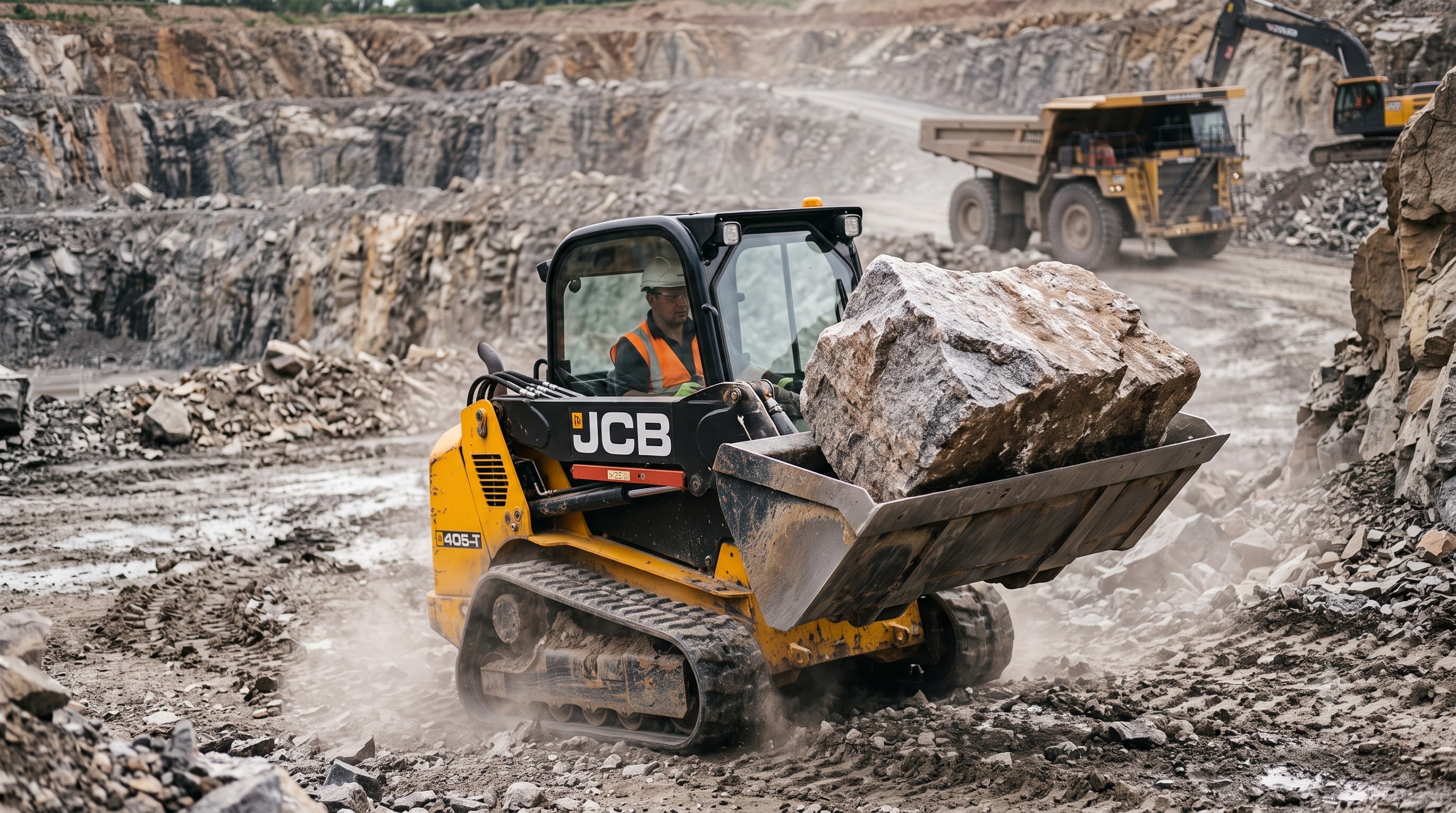
- Construction & Earthmoving: In urban and residential construction, the 5 ton Mini Loader is indispensable for tasks such as site preparation, trench backfilling, loading trucks with aggregate, and handling heavy building materials in confined spaces. Its tight turning radius allows it to operate efficiently in fenced-in residential lots or between buildings.
- Agriculture & Material Handling: Modern agricultural operations utilize these loaders for loading feed, moving pallets, handling hay bales, and performing general material handling tasks in and around barns and feedlots. The ability to quickly switch between a standard bucket, pallet forks, and bale spears makes it a versatile tool for the farm.
- Mining & Quarrying: Small-scale and underground mining operations rely on the 5 ton Mini Loader for removing shot rock, feeding crushers, and stockpiling materials . Their robust construction and high break-out force enable them to handle the demanding cycles and abrasive materials common in this sector.
- Industrial & Waste Management: In recycling facilities, warehouses, and manufacturing plants, the loader's compact size and powerful hydraulics make it ideal for moving heavy raw materials, loading processing machinery, and managing waste and scrap material with specialized attachments like grapples and log clamps .
Conclusion
The 5 ton Mini Loader represents a pinnacle of engineering in the compact equipment sector, effectively bridging the critical gap between large-scale earthmoving machinery and minimal-capacity utility vehicles. Its meticulously engineered powertrain, robust structural design, and advanced hydraulic systems provide a level of productivity that was once exclusive to much larger and more expensive machines. As industrial and construction projects continue to evolve, demanding greater efficiency, tighter maneuverability, and lower operational costs, the 5 ton Mini Loader stands as an essential asset. It provides a powerful, versatile, and cost-effective solution to today's most pressing industrial productivity challenges, ensuring that even the most demanding jobs are completed with maximum efficiency and reliability.