

Overview
For B2B procurement managers and fleet operators, understanding the nuances of a 20-ton agricultural loader is crucial for maximizing ROI and minimizing downtime. These machines are the backbone of large-scale farming, material handling, and heavy-duty loading operations. This FAQ addresses the most critical pre-sales and post-sales questions, from engine specifications and payload capacities to maintenance intervals and attachment compatibility.
Frequently Asked Questions
Q1: What is the standard maintenance interval for a 20-ton agricultural loader?
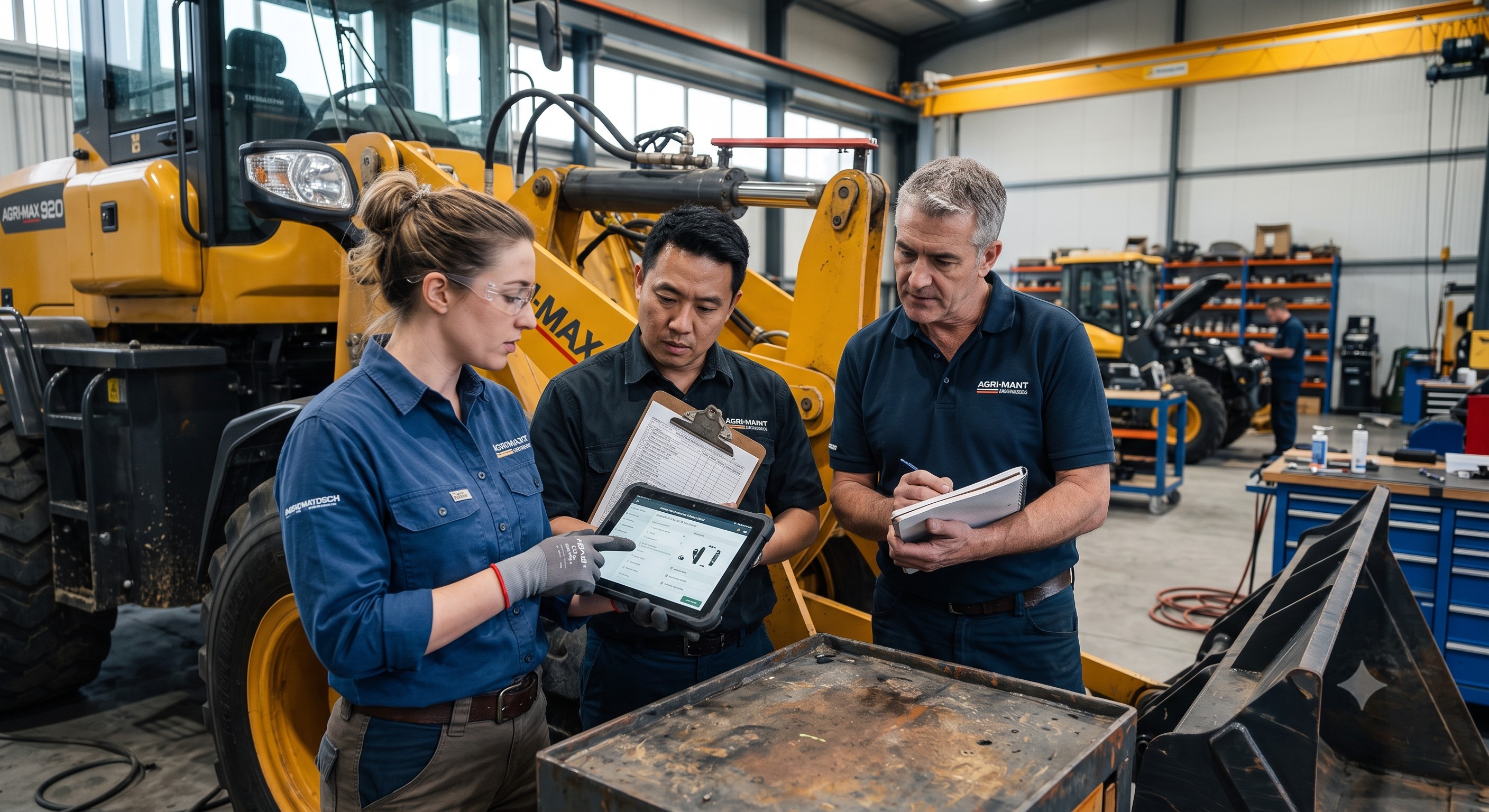
The standard maintenance interval for a 20-ton agricultural loader is typically based on engine hours, with daily pre-operation checks and major service tasks scheduled every 250 to 500 hours . Critical daily checks include inspecting fluid levels (engine oil, hydraulic fluid, coolant) and looking for leaks . Weekly maintenance should involve cleaning debris from radiators to prevent overheating, and lubricating all grease points on the loader arms and articulation joint . It is essential to adhere to the manufacturer's specific guidelines found in the operator's manual for tasks like oil and filter changes .
Q2: What is the maximum payload capacity of a 20-ton agricultural loader?
The maximum payload capacity of a 20-ton agricultural loader is typically in excess of six tonnes (approximately 13,200 lbs) . For example, a leading model in this class, the JCB 457S, is rated with a 6-tonne payload . This high capacity allows for efficient bulk handling of materials like silage, maize, and muck, making it ideal for large-scale agricultural operations .
Q3: What engine and emission standards apply to a 20-ton agricultural loader?
The 20-ton agricultural loader is typically powered by a high-performance, six-cylinder engine, such as the Cummins B6.7, which meets stringent emission standards . For instance, the JCB 457S features a 6.7-litre engine that delivers up to 282hp (210kW) in Dynamic mode and has a standard output of 224hp (167kW) in Economy mode . The Economy mode includes an auto engine shut-down feature, which helps improve overall fuel economy and reduce emissions .
Q4: What attachments are compatible with a 20-ton agricultural loader?
A 20-ton agricultural loader is compatible with a range of high-capacity attachments, including folding grass forks, buckets, and tow hitches . Specifically, a new 4.88m (16ft) wide folding grass fork with a 7.10 cubic meter capacity has been developed to match the 6-tonne payload of these machines . The loader can also be fitted with a 20-tonne capacity Rockinger tow hitch for towing trailers . It is critical to use attachments that are performance-matched and certified for the loader to ensure safety and operational efficiency .
Q5: How often should the hydraulic fluid be changed in a 20-ton loader?
Hydraulic fluid in a 20-ton loader should be changed based on the manufacturer's schedule, often guided by an oil analysis, but a common interval is every 1,000 to 2,000 hours of operation . The exact interval can vary significantly depending on the operating environment; dusty conditions common in agriculture require more frequent fluid changes . Regular monitoring of hydraulic oil levels and cleanliness is vital, as contaminants can quickly accelerate wear on pumps, valves, and cylinders .
Q6: What are the common pre-sales specifications to evaluate for a 20-ton loader?
Key pre-sales specifications for a 20-ton loader include its lift height, power-to-weight ratio, transmission type, and axle configuration . For example, options may include standard High Torque arms with a 4.3m lift height or High Lift arms at 4.8m to clear hoppers . Look for a class-leading power-to-weight ratio (e.g., 14hp/tonne), a robust powershift transmission with torque converter lock-up, and heavy-duty axles with limited slip or locking differentials for superior traction .
Q7: How do I manage dust and cooling system protection during harvest?
To manage dust and cooling system protection during harvest, you must perform daily radiator cleaning and utilize features like an auto-reversing fan . The auto-reversing fan helps dislodge debris from the cooling matrix, while a swing-out fan assembly allows for quick access to the radiator core for thorough cleaning . It is also highly recommended to clean the cooling system at the end of each shift with compressed air to prevent dust and chaff from hardening and restricting airflow .
Q8: What should my pre-season maintenance checklist include?
Your pre-season maintenance checklist for a 20-ton loader should include a full exterior wash, hydraulic fluid and filter change, a cooling system flush, tire inspection, and a complete lubrication of all pivot points . Checking belt tension and battery terminals are also critical tasks to perform in the 30-60 day window before the busy season . This preparation ensures the machine is ready to withstand the extreme stress of continuous operation during peak periods .